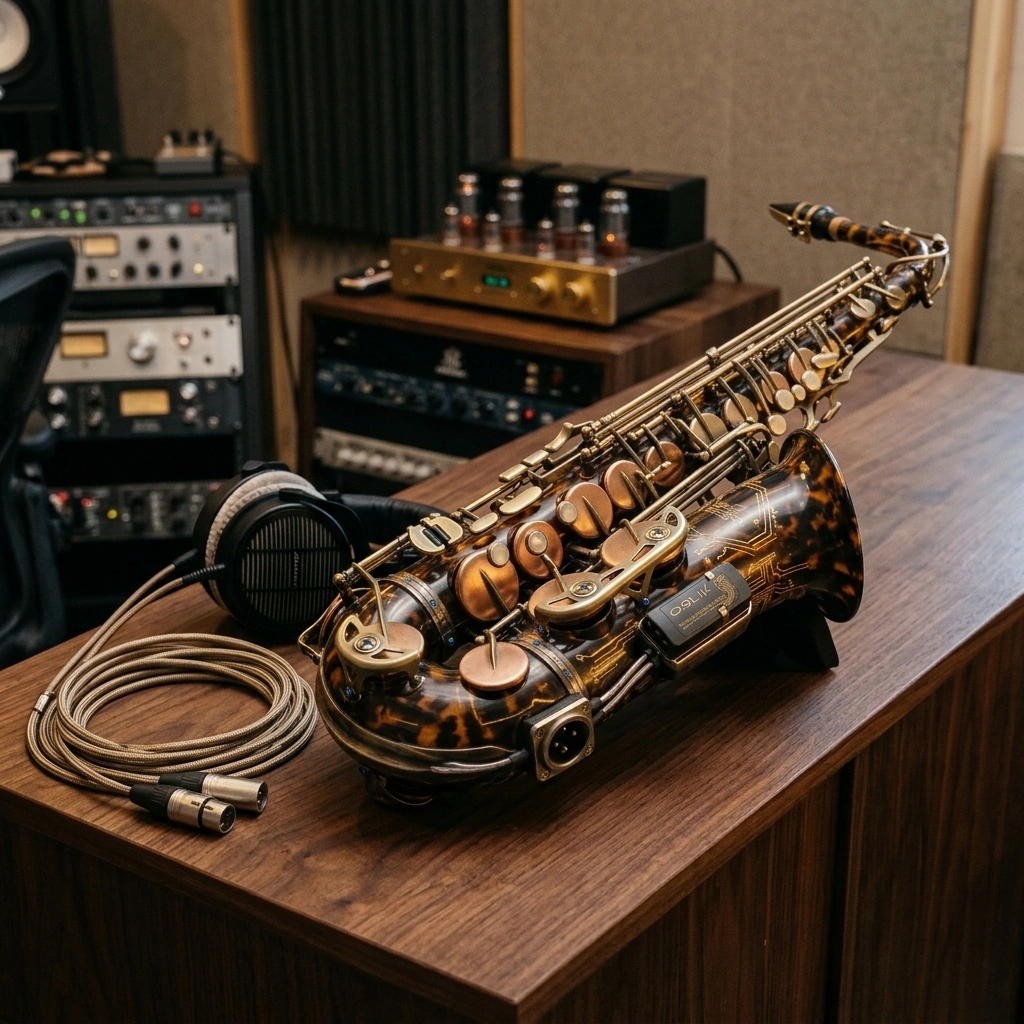
Oblik Specimen-01 Saxophone
Acoustic nuance via light speed processing
The Oblik Specimen-01 converts internal breath dynamics into balanced line audio with an onboard optical sensor array and zero tracking lag.
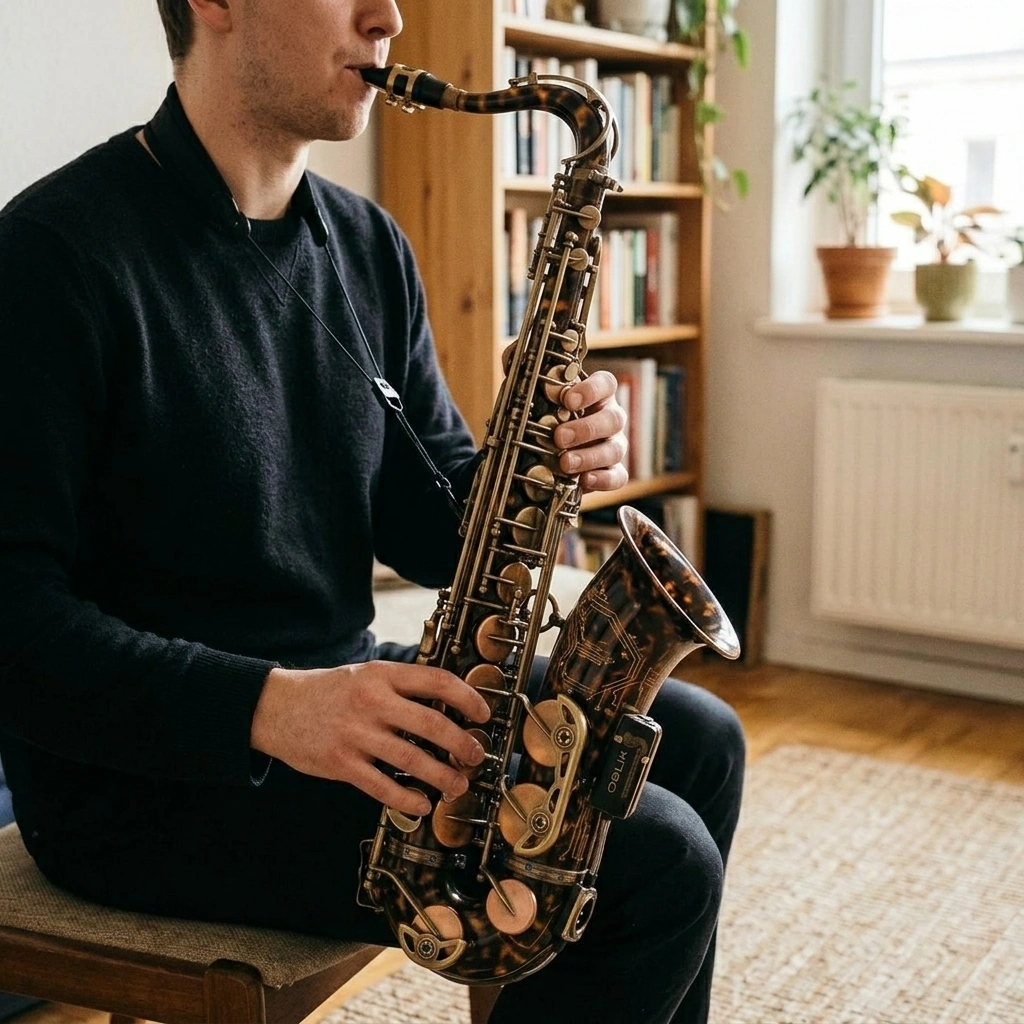
Every breath.
Your rig.
Traditional wind instruments require clip-on microphones that pick up drum bleed and induce feedback loops the moment stage volume spikes. Conventional digital wind controllers solve the bleed problem but replace acoustic behavior with plastic triggers and noticeable tracking lag. The Specimen-01 uses internal acoustic light telemetry to bypass external microphones entirely. Embedded optical laser diodes and photo-sensor arrays track soundwaves directly inside the composite chamber, feeding an onboard graphics processor that runs real-time Fourier analysis. The result is uncompressed, balanced line audio sent directly over XLR with zero tracking delay. Physical touch remains acoustic. Machined brushed brass keys pivot on blued-steel screws, while hollow-forged copper resonators transmit vibrating mechanical feedback into your hands. You keep the tactile resistance, embouchure dynamics, and key travel of a conventional horn while running pure line-level output straight to the desk.
Built for
the player.
0ms
tracking delay from optical soundwave Fourier conversion
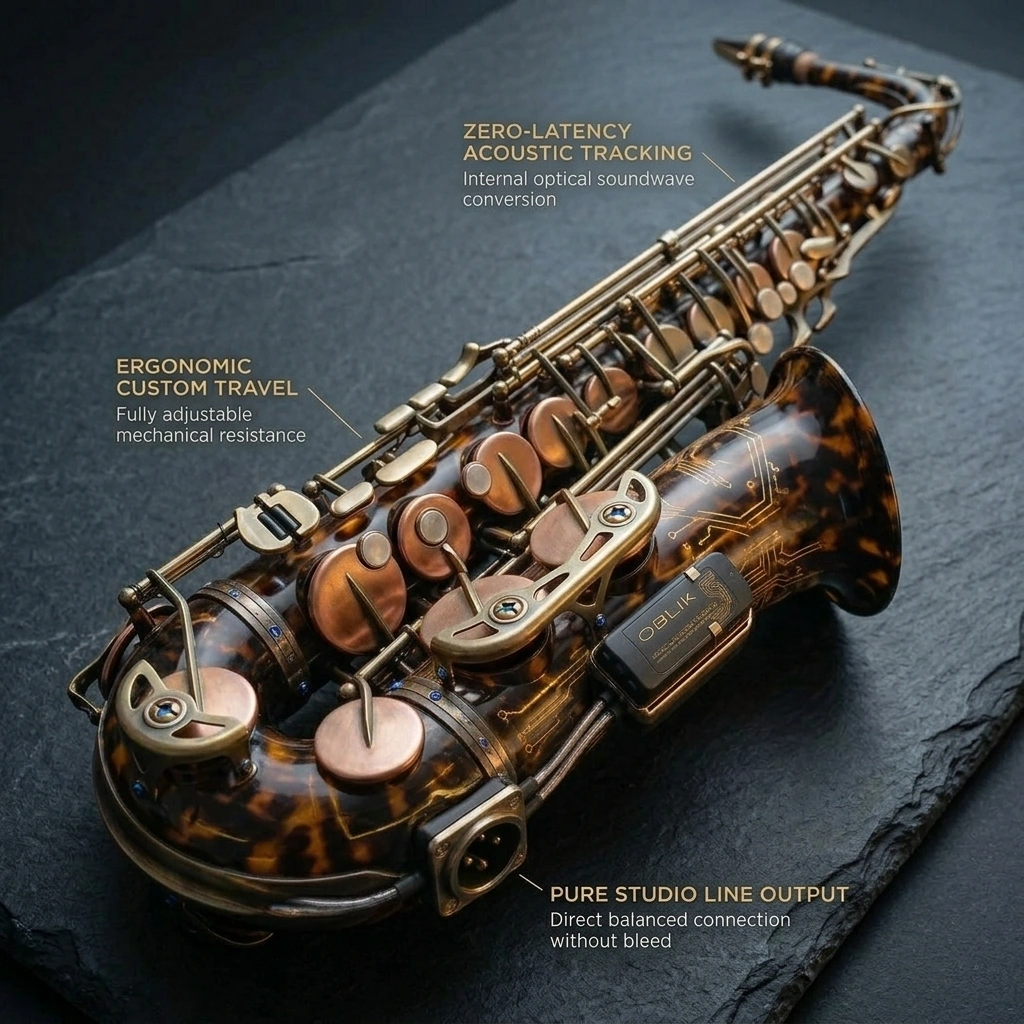
- Internal laser diodes read soundwaves directly to eliminate stage bleed
- Dedicated onboard GPU computes instant Fourier analysis with 0ms delay
- Hollow-forged copper resonators maintain true acoustic feedback under the fingers
- Chassis-mounted balanced XLR plugs straight into mixers or stage snakes
- Adjustable regulation and spring tension calibrate to your exact hand setup
- Dimensions
- 26" x 8" x 5"
- Body Material
- Translucent amber tortoise shell composite
- Resonators
- Hollow-forged copper
- Keywork
- Machined brushed brass with blued-steel pivot screws
- Sensor Core
- Optical laser diodes and photo-sensor array
- Audio Processing
- Dedicated onboard GPU Fourier processor
- Output
- Chassis-mounted balanced 3-pin XLR
How does the optical sensor array register breath nuance?
Internal laser diodes and photo-sensors track internal acoustic soundwaves directly within the body chamber. This telemetry registers subtle embouchure changes and multiphonics at the speed of light, avoiding the microphone spill and feedback common in loud stage environments.
What equipment do I need to connect the instrument on stage or in studio?
Run a standard balanced microphone cable from the chassis-mounted XLR output directly into an audio interface, front-of-house mixing console, or live pedalboard. It delivers a line-level balanced audio feed without requiring external converter boxes.
Can the physical feel and key resistance be customized?
Yes. The keywork is super-adjustable using the included precision hex adjustment tool, allowing you to regulate key travel, balance spring tension, and tune palm key height to match your personal playing biomechanics.
How do I clean and store the Specimen-01?
Wipe down the composite exterior and optical access surfaces with a clean, dry microfiber cloth after playing. Store and transport the instrument in the included hard flight case to protect key regulation and optical alignment.