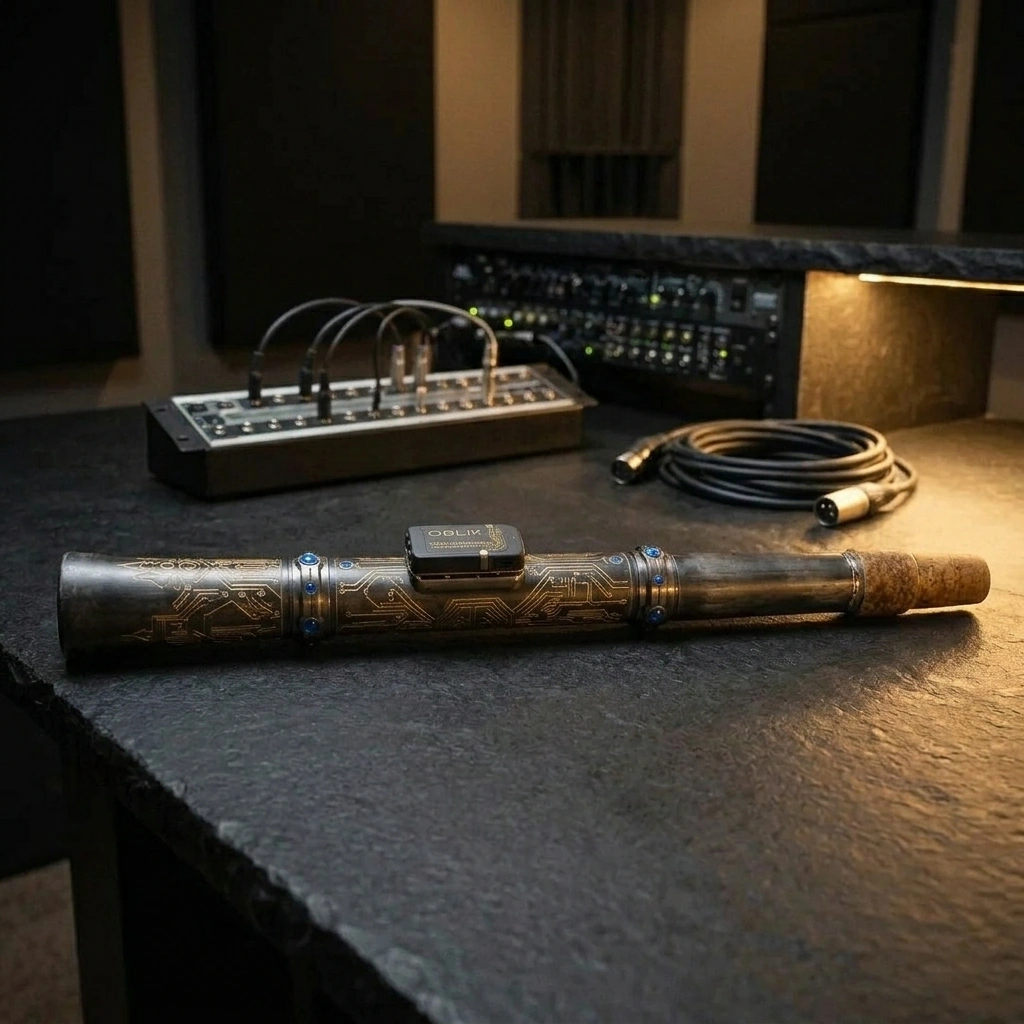
Resonator One
Acoustic Didjeridoo Drone With Real-Time Laser Tracking
The Oblik Resonator One pairs a lead-lined ceramic acoustic body with integrated optical tracking to control digital synthesizers directly from natural breath dynamics.
Every breath.
Your rig.
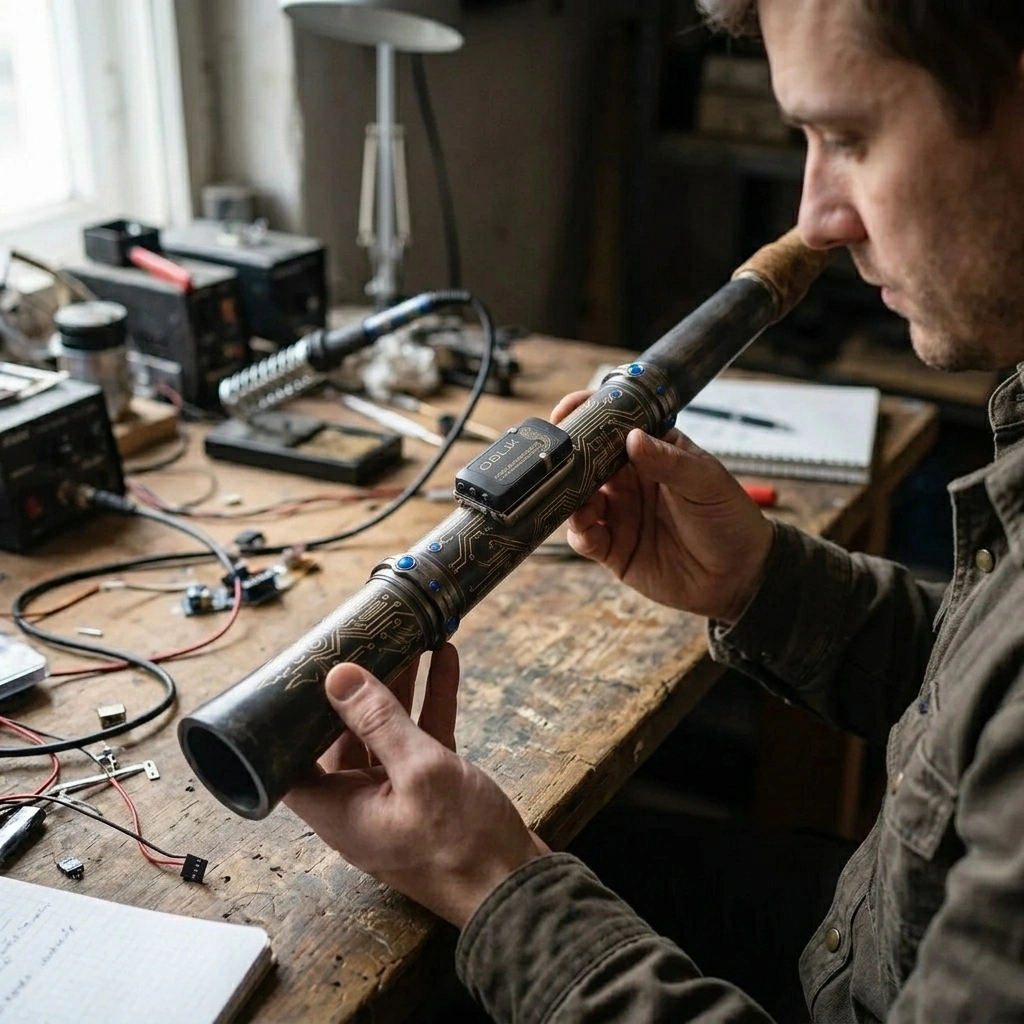
Wind controllers typically replace physical air columns with electronic pressure sensors, abandoning the natural acoustic resistance wind performers rely on. Resonator One preserves physical acoustic performance by housing internal optical detection within a 58-inch ceramic instrument. The lead-lined interior wall isolates external stage sound while providing the exact physical backpressure needed for sustained circular breathing. As you drone and shape overtones with your throat, an internal solid-state laser ring detects minute node displacements along the bore. The onboard Fourier transform processor translates these harmonic shifts directly into continuous control data, giving electronic producers direct physical authority over modern synthesizers.
Built for
the player.
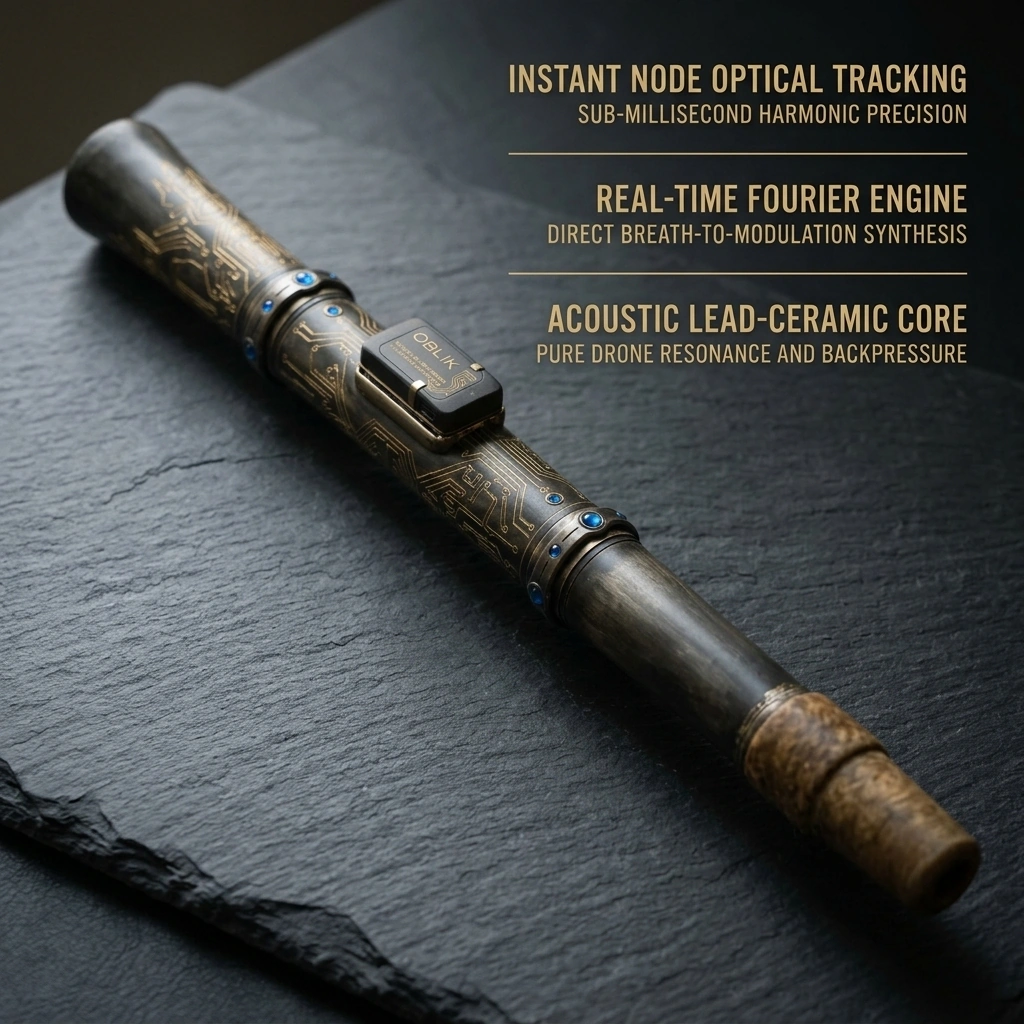
- Internal laser ring captures acoustic node movement without stage microphones
- Onboard Fourier transform processor converts vocal overtones into instant digital modulation
- High-density ceramic body with lead lining creates stable resonant backpressure
- Handcrafted pure beeswax rim ensures an airtight, comfortable embouchure seal
- Simultaneous analog audio and digital outputs drive modular synths and DAWs together
- Instrument Type
- Electronic didjeridoo
- Dimensions
- 58" length x 3.5" diameter
- Body Material
- High-density ceramic with lead dampening liner
- Mouthpiece
- Handcrafted pure natural beeswax
- Internal Sensor
- Solid-state laser emitter ring and photoreactive optical nodes
- Digital Signal Processor
- Integrated Fourier transform DSP PCB
- Outputs
- Balanced analog audio and digital control
How does the instrument capture digital control without a microphone?
An integrated solid-state laser emitter ring and photoreactive optical nodes track interior air reflections and acoustic harmonics directly inside the body. The internal DSP analyzes these shifts instantly, sending digital control to your synthesizer without picking up ambient room bleed or speaker feedback.
Does the instrument support traditional circular breathing techniques?
Yes. The lead-lined ceramic core produces genuine physical acoustic resistance, allowing performers to use standard circular breathing techniques and continuous drone pressure exactly like a traditional acoustic didjeridoo.
What gear can I connect to Resonator One?
Resonator One includes balanced analog audio outputs alongside digital control outputs, allowing you to feed audio interfaces, live mixers, modular synthesizers, and studio software simultaneously.
How should I maintain the beeswax mouthpiece?
Wipe the natural beeswax rim clean with a soft, dry cloth after each playing session to clear moisture. Keep the instrument away from direct heat sources to preserve the molded embouchure shape.